
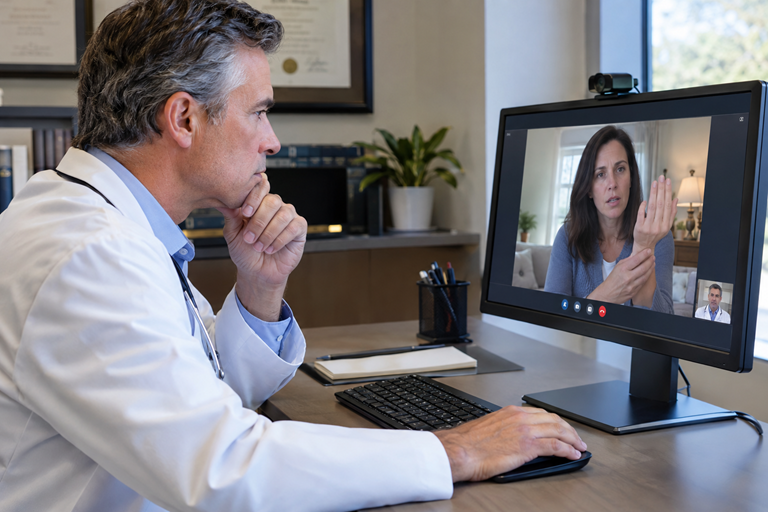
The Telemedicine Trap: How Virtual Acute Care Is Redefining Hospital Malpractice Standards
Introduction: Beyond the Routine Virtual Visit
Telehealth once meant a primary care check-in, a routine prescription refill, or an outpatient mental health session conducted over video. That era is over. Hospitals now depend on remote hospitalists and centralized virtual ICU (e-ICU) centers to manage critically ill patients around the clock, driven largely by chronic staffing shortages in acute and critical care.
This shift has created a distinct legal vulnerability that trial lawyers are only beginning to fully litigate: the telemedicine trap. In a clinical emergency, an off-site physician often has no choice but to rely entirely on a bedside nurse to relay vitals, symptoms, and changing patient status in real time. Every layer of relayed information is a potential point of delay, distortion, or omission — and in acute care, minutes determine outcomes.
As litigation involving virtual acute care accelerates, proving or defending a deviation from the standard of care requires an expert witness who understands the specific friction points between remote telemetry and bedside reality — not a generalist who has never worked inside an e-ICU workflow.
Section 1: Anatomy of an Acute Care Telemedicine Failure
Virtual acute care malpractice claims tend to concentrate around three recurring failure points, each with its own evidentiary complexity.
The Game of “Telephone” in Critical Emergencies
When a patient begins to deteriorate, a bedside nurse becomes the eyes and hands of a physician who is miles away and unable to perform a physical exam. Every relayed vital sign, every described symptom, and every verbal order introduces a communication lag that can mean the difference between timely intervention and a preventable harm. Litigation frequently turns on reconstructing exactly what was said, when it was said, and how quickly the remote hospitalist acted on it.
Alarm Fatigue and Remote Telemetry Ingestion
Modern e-ICU centers ingest continuous data streams from dozens of patients across multiple hospitals simultaneously. This volume creates a documented risk of alarm fatigue — a phenomenon where a critical alert is delayed, downplayed, or missed entirely amid a constant flow of lower-priority notifications. When a remote monitoring physician fails to escalate a genuinely critical signal, the resulting malpractice claim hinges on proving what the monitoring system displayed, and what a reasonably attentive remote clinician should have caught.
Ambiguous Chains of Command
Perhaps the most legally contentious issue in virtual acute care is determining who bears ultimate responsibility when a patient crashes: the on-call remote hospitalist issuing orders from an offsite command center, or the floor nurse physically present and executing those orders in real time. Hospital protocols don’t always resolve this cleanly, and ambiguous chains of command frequently become a central battleground in both plaintiff and defense strategy.
Section 2: Establishing the Standard of Care for Virtual Hospitalists
A general primary care physician or a traditional outpatient telehealth provider is not equipped to evaluate these cases. Establishing the acute care telemedicine standard of care requires an expert with direct, current experience inside inpatient acute care environments. Litigators vetting candidates should require:
- Active or extensive inpatient hospital experience, including hands-on use of acute electronic health record (EHR) systems and remote patient monitoring workflows — not theoretical familiarity, but daily operational fluency.
- Deep knowledge of hospital escalation protocols, including rapid response team activation criteria and the specific clinical workflows that govern e-ICU decision-making.
- The ability to reconstruct and cross-reference multiple, often conflicting data trails: the physical bedside chart, remote data-logging software timestamps, and communication logs spanning secure texts, phone calls, and video consultations.
- Credentials strong enough to survive Daubert or Federal Rule of Evidence 702 challenges, particularly around systemic hospital liability theories and clinical causation, which are aggressively contested in this category of litigation.
Attorneys should treat timestamp reconciliation as a non-negotiable expert skill. A remote hospitalist liability lawsuit frequently lives or dies on whether the expert can align disparate system clocks — EHR entries, telemetry alerts, and communication logs — into a single, defensible timeline.
Section 3: Sourcing Specialized Acute Care Experts Before a Crisis Hits
Finding an actively practicing critical care physician or hospitalist willing to testify specifically on virtual care cases is notoriously difficult through outdated, generalized expert witness directories. Most legacy databases were never built to capture the narrow, fast-evolving intersection of remote monitoring technology and inpatient acute medicine.
As a result, forward-thinking hospitalists, critical care physicians, and trauma nurses with virtual care experience are increasingly building detailed, searchable digital profiles that bypass slow intermediaries entirely. This allows them to connect directly with the trial law firms actively seeking their specific operational knowledge, rather than waiting to be found through a static, outdated roster.
Conclusion: Malpractice Strategy Must Evolve With Virtual Care
Virtual ICUs and remote hospitalist coverage are no longer a stopgap measure — they are a permanent fixture of modern hospital operations. Malpractice strategy, on both the plaintiff and defense side, has to evolve at the same pace, and that starts with sourcing telehealth ICU expert testimony from someone who has actually worked inside these systems.
For Attorneys: Evaluating a complex virtual ICU or remote hospitalist case? Don’t settle for a generalized medical expert. Browse ExpertWitnessWebPages.com today to connect directly with specialized acute care telemedicine experts who can precisely evaluate your medical records.
For Experts: Are you a practicing hospitalist, critical care physician, or trauma nurse with experience in virtual care? Your insights are desperately needed in today’s legal landscape. List your credentials on ExpertWitnessWebPages.com to get discovered by top-tier litigators.
Frequently Asked Questions
What is a virtual ICU malpractice expert witness?
A virtual ICU malpractice expert witness is a clinician, typically a practicing hospitalist or critical care physician, who evaluates whether a remote care team met the applicable standard of care during a critical patient event. They analyze EHR timestamps, telemetry data, and communication logs to determine whether delays or miscommunications between bedside staff and off-site physicians contributed to patient harm.
How is the standard of care different for virtual acute care versus in-person treatment?
The acute care telemedicine standard of care accounts for the physical limitations of remote treatment, such as the inability to perform a hands-on exam, and layers in expectations around timely data review, alert response, and clear communication protocols between bedside and remote clinicians. An expert must understand both traditional bedside standards and the operational realities specific to e-ICU and remote hospitalist workflows.
Why can’t a general telehealth provider serve as an expert in these cases?
Traditional telehealth involves outpatient, non-emergent care, which operates under entirely different clinical expectations than acute, inpatient critical care. A qualified expert needs direct experience with inpatient EHR systems, rapid response protocols, and e-ICU monitoring workflows — expertise a routine outpatient telehealth provider typically does not have.
What evidence does a virtual ICU expert typically need to review?
Experts in these cases reconstruct multiple parallel data sources, including the physical hospital chart, remote telemetry and monitoring software timestamps, and communication records such as secure messaging, phone logs, and video consultation footage. Reconciling these sources into a single accurate timeline is often the most technically demanding part of the case.
What causes most remote hospitalist liability lawsuits?
Common triggers include communication breakdowns between bedside nurses and off-site physicians during emergencies, missed or delayed responses to critical telemetry alerts amid high alarm volume, and unclear chains of command between remote physicians and on-site staff during a rapidly deteriorating patient event.
How can attorneys find a qualified telehealth ICU expert witness?
Because virtual acute care expertise is highly specialized and difficult to locate through traditional expert witness agencies, many litigators now turn to dedicated directories like ExpertWitnessWebPages.com, where actively practicing hospitalists and critical care physicians list their credentials and remote care experience directly.
How can a hospitalist or critical care physician become an expert witness in virtual care cases?
Physicians and nurses with hands-on e-ICU or remote hospitalist experience can build a detailed expert profile outlining their clinical background, EHR and telemetry system familiarity, and any prior litigation involvement. Listing on a platform like ExpertWitnessWebPages.com makes that experience directly discoverable to attorneys searching for this specific niche.


0 Comments